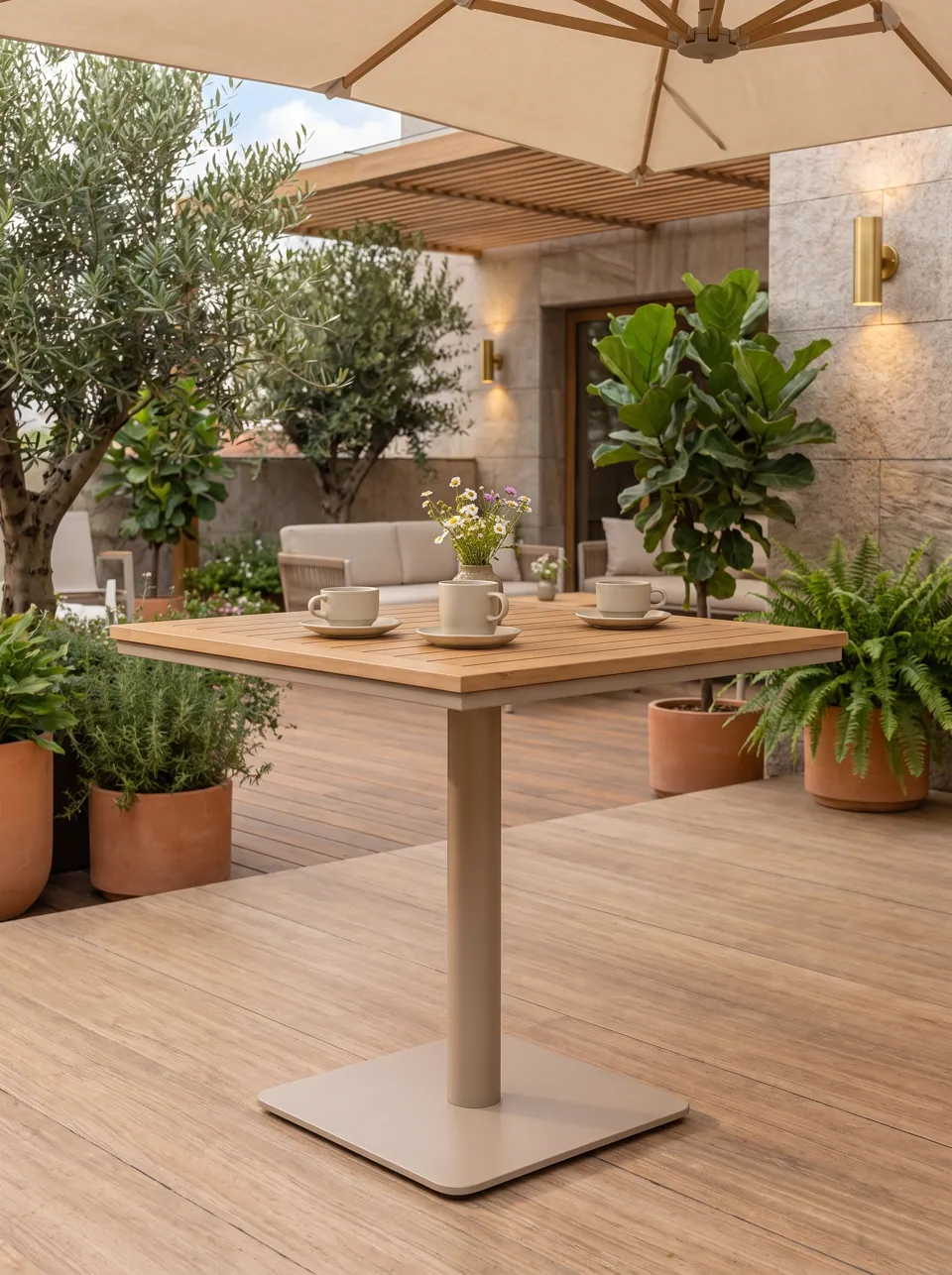
On a patio, the table base does more work than the top. It has to stay level on pavers that slope for drainage, resist tipping when an umbrella or a leaning guest loads one edge, and survive being dragged. We size bases to the top and fit adjustable levelers as standard.
| Top material | Weight | Heat and stain | Wind behavior | Typical use |
|---|---|---|---|---|
| Slatted aluminum | Light | Good | Lets wind and rain through | Rooftops, casual patios |
| Wood-look composite slats | Medium | Good | Neutral | Hotel terraces, bistros |
| Exterior compact laminate | Medium | Very good | Neutral | High-turnover dining |
| Sintered stone / porcelain | Heavy | Excellent | Very stable | Upscale patios |
| Solid teak | Medium | Needs oiling or weathers gray | Neutral | Resort, heritage looks |
Sizing rules of thumb
- Two-tops: 24-30 in (60-76 cm) square or round.
- Four-tops: 30-36 in (76-91 cm) square, or 28 × 48 in (71 × 122 cm) rectangular against booths.
- Height: 29-30 in (74-76 cm) for dining; accessible tables need a 28-34 in (71-86 cm) surface and 27 in (69 cm) knee clearance under ADA 2010 §902.
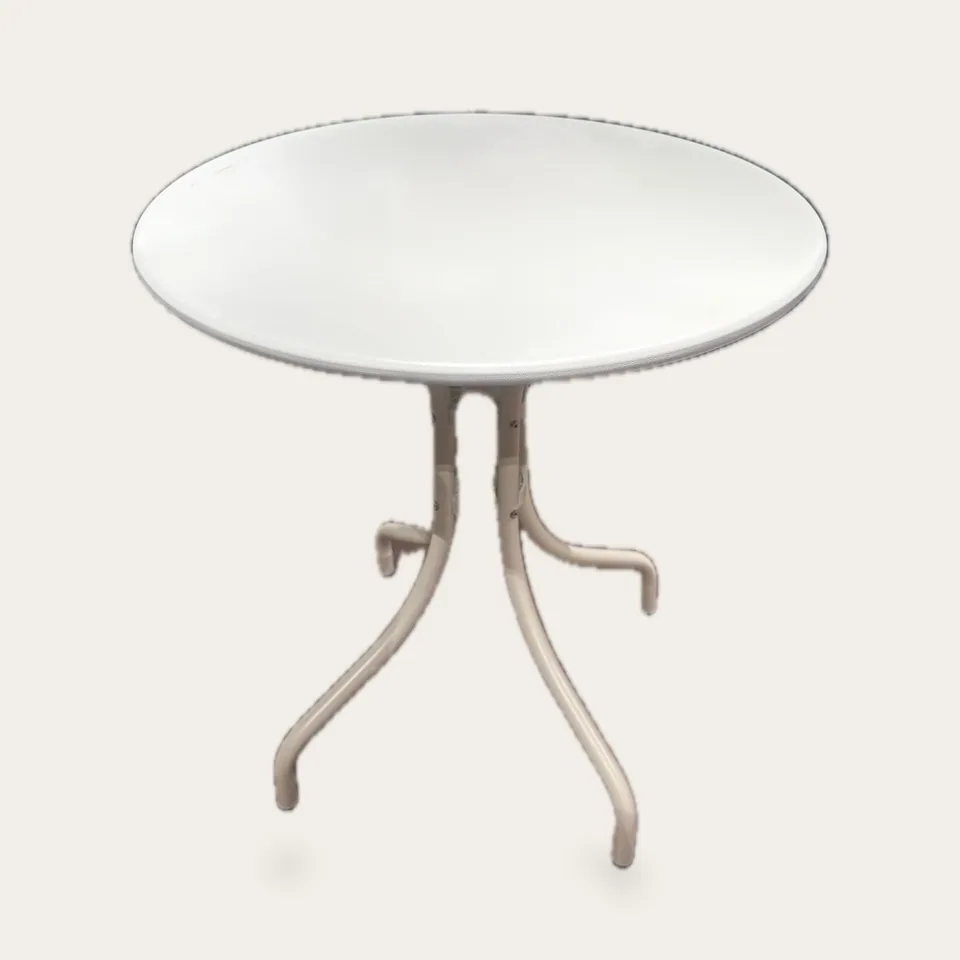
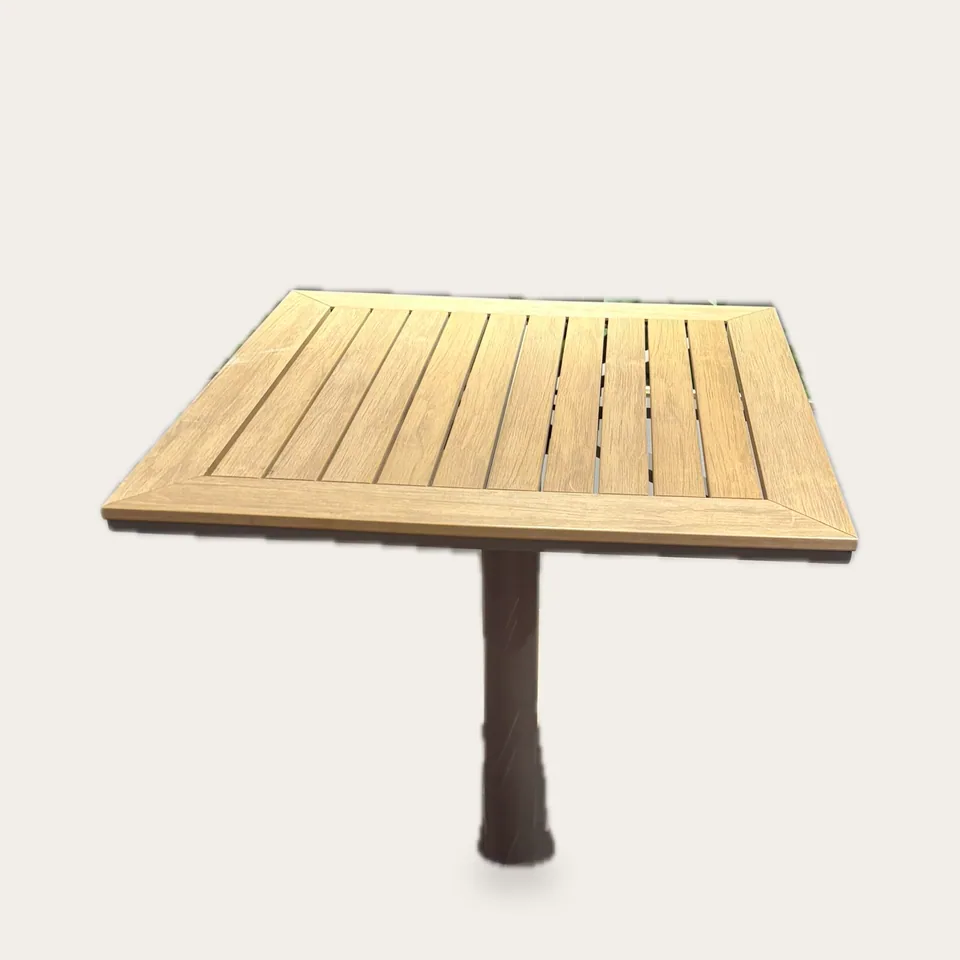
The Promenade Round Bistro Table (solid metal top) and Pier Teak-Look Pedestal Table (slatted composite top) are the two core designs; both are made in custom sizes.