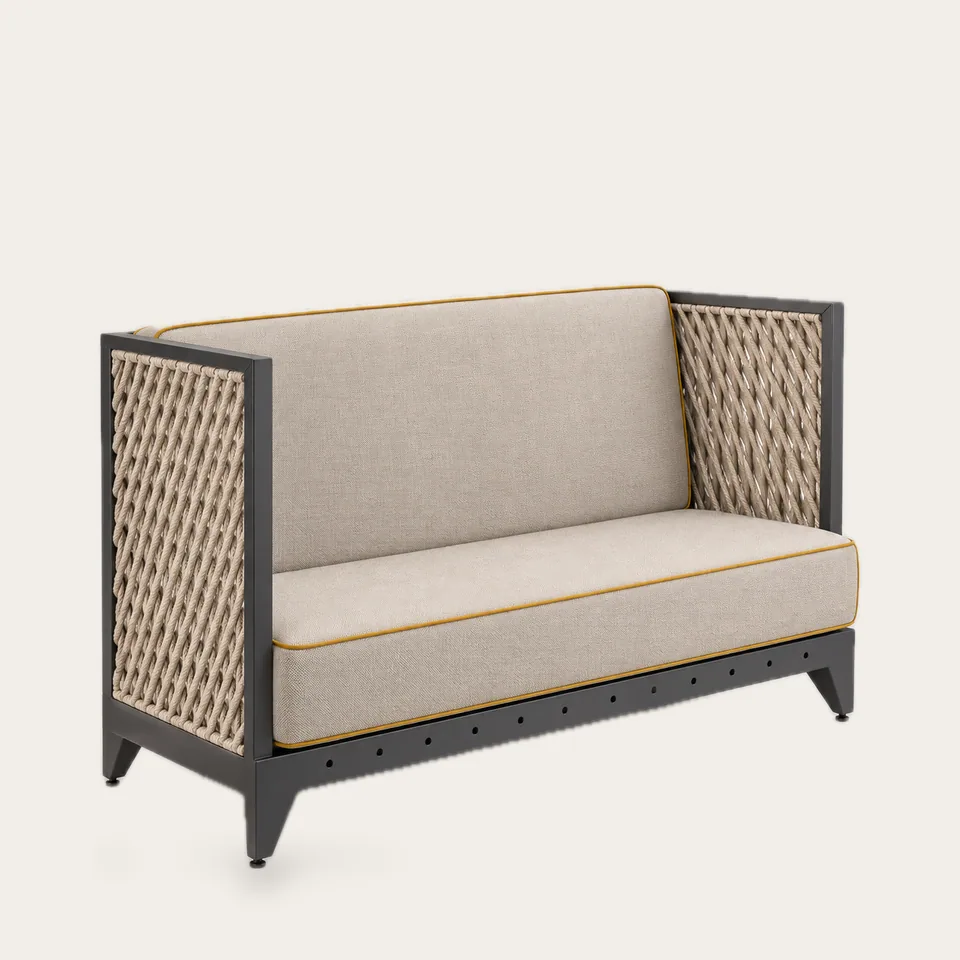
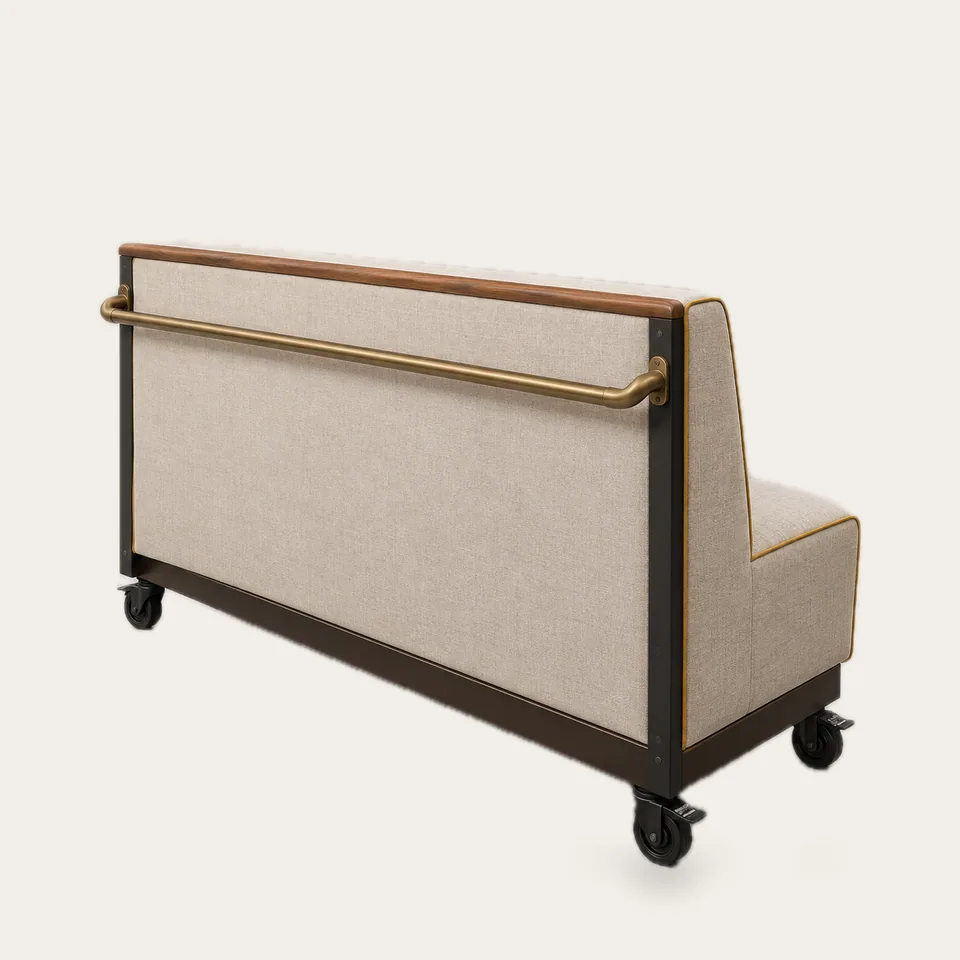
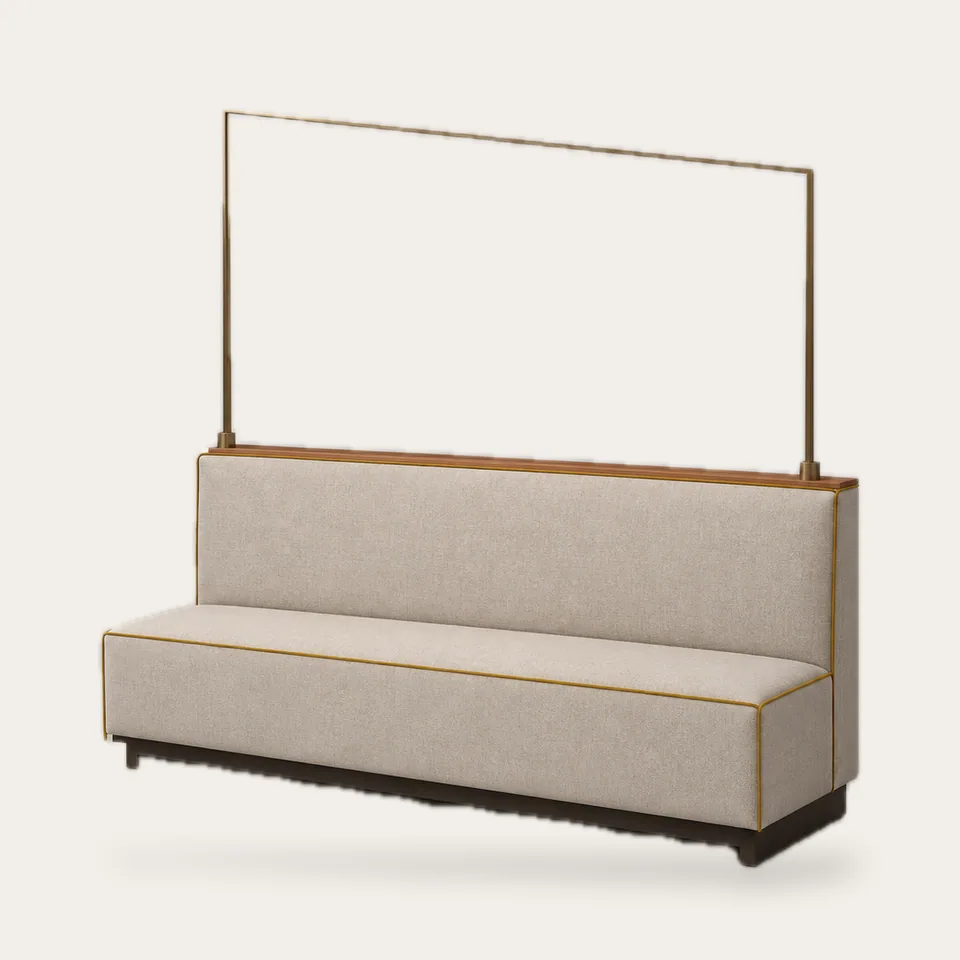
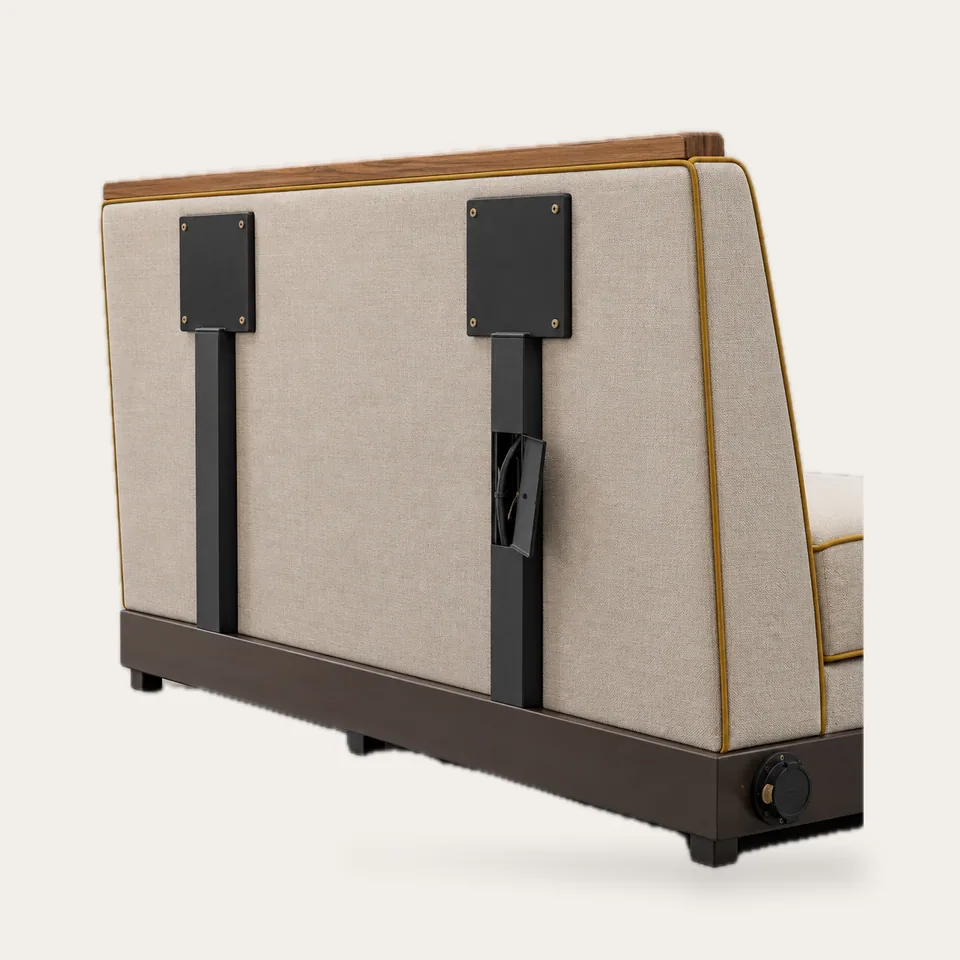
An indoor booth moved outside fails in one season: the seat box fills with water, the MDF swells and the foam turns into a sponge. Every booth in this collection is built around the opposite assumption, that it will be rained on, sun-baked and hosed down.
How they are built
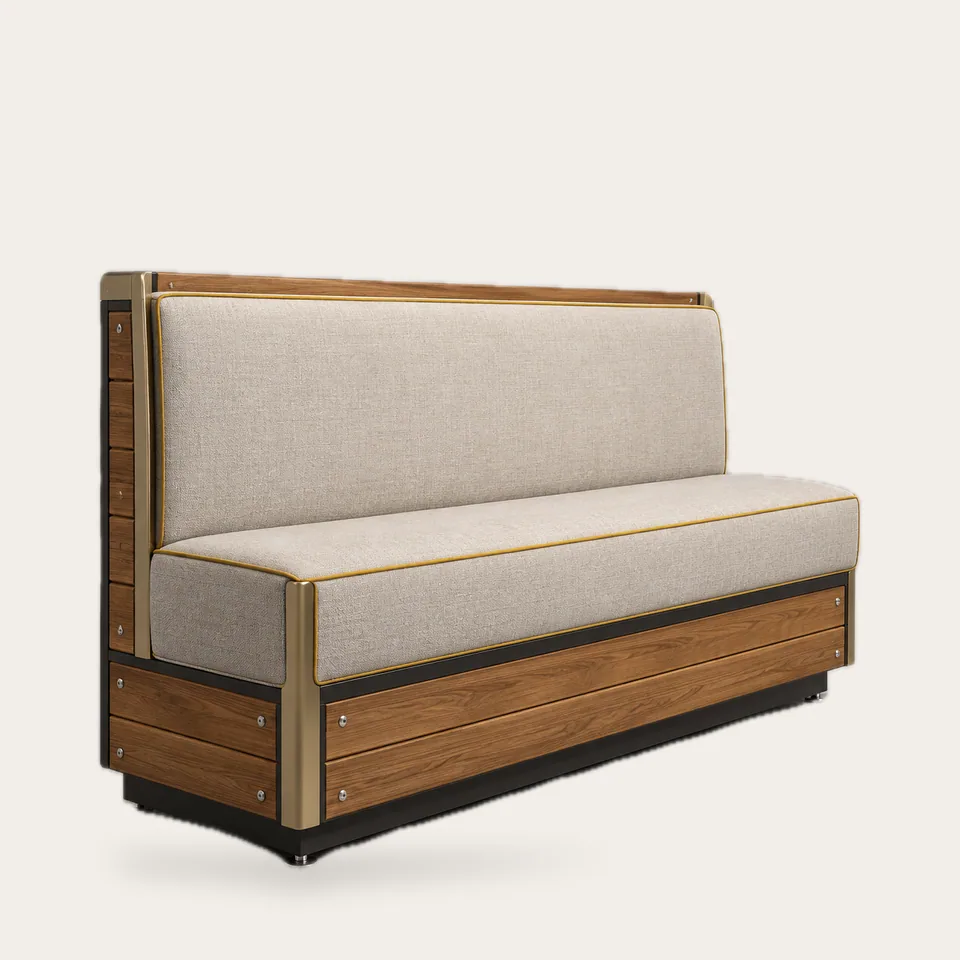
- Frame: welded aluminum (6061-T6 on the structural members), pretreated and powder-coated. Coastal and pool-deck versions move up to a fluoropolymer coating system and 316 stainless fasteners.
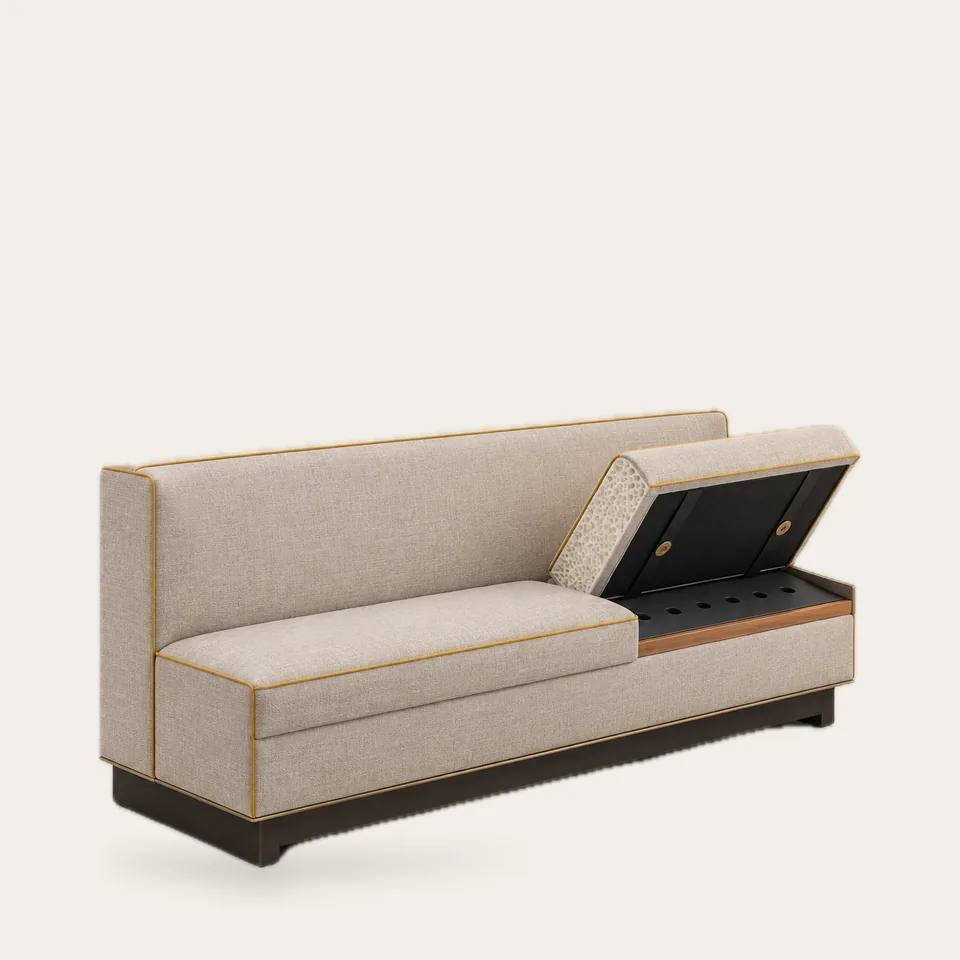
- Seat deck: perforated with drain holes and pitched slightly forward so water runs off the front edge, not into the cushion.
- Cushions: open-cell quick-dry foam wrapped in solution-dyed outdoor fabric, with ties or snaps underneath so wind cannot lift them.
- Plinth: raised on adjustable glides so the base never sits in standing water and decks can be swept underneath.
Which booth for which site
| Booth | Best for | Key feature |
|---|---|---|
| Tidewater All-Weather Booth | General patios | Drain-hole deck, 2° forward pitch |
| Coastline Marine-Grade Booth | Beachfront, pool decks | Fluoropolymer coating, 316 stainless hardware |
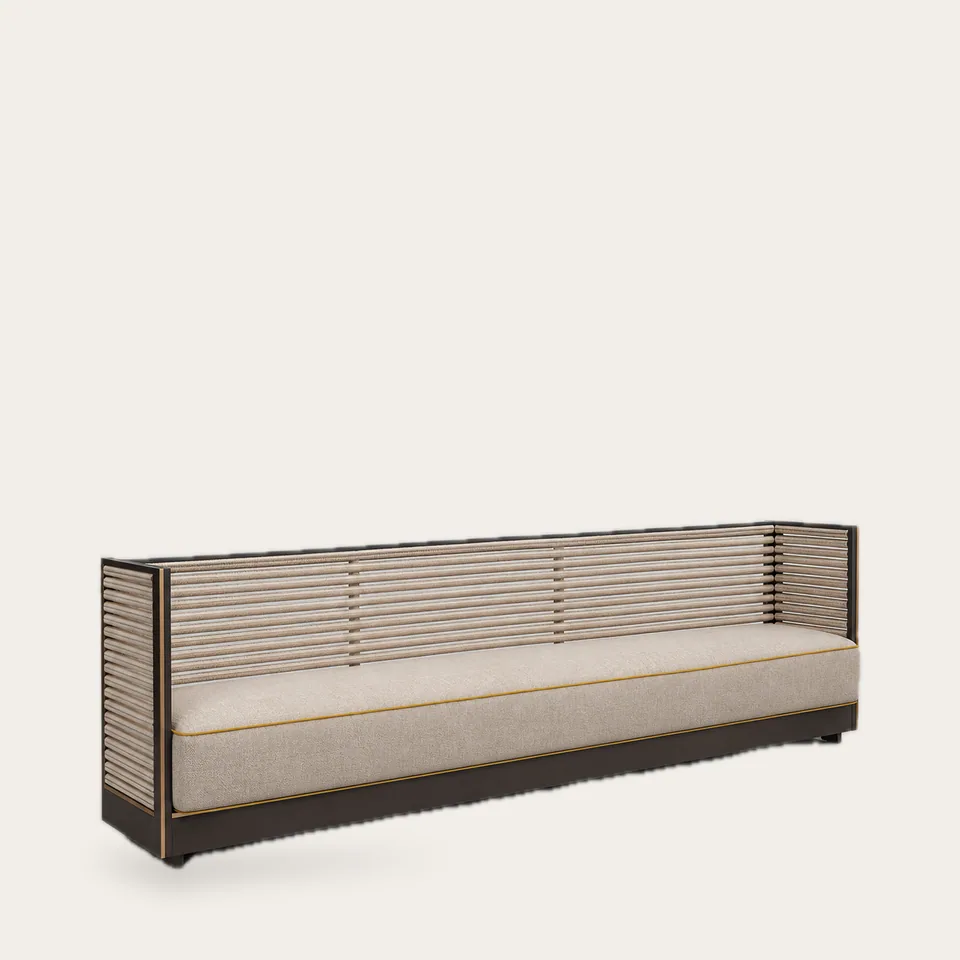
| Breezeway Rope-Back Bench | Rooftops, windy corners | Open rope back lets wind through |
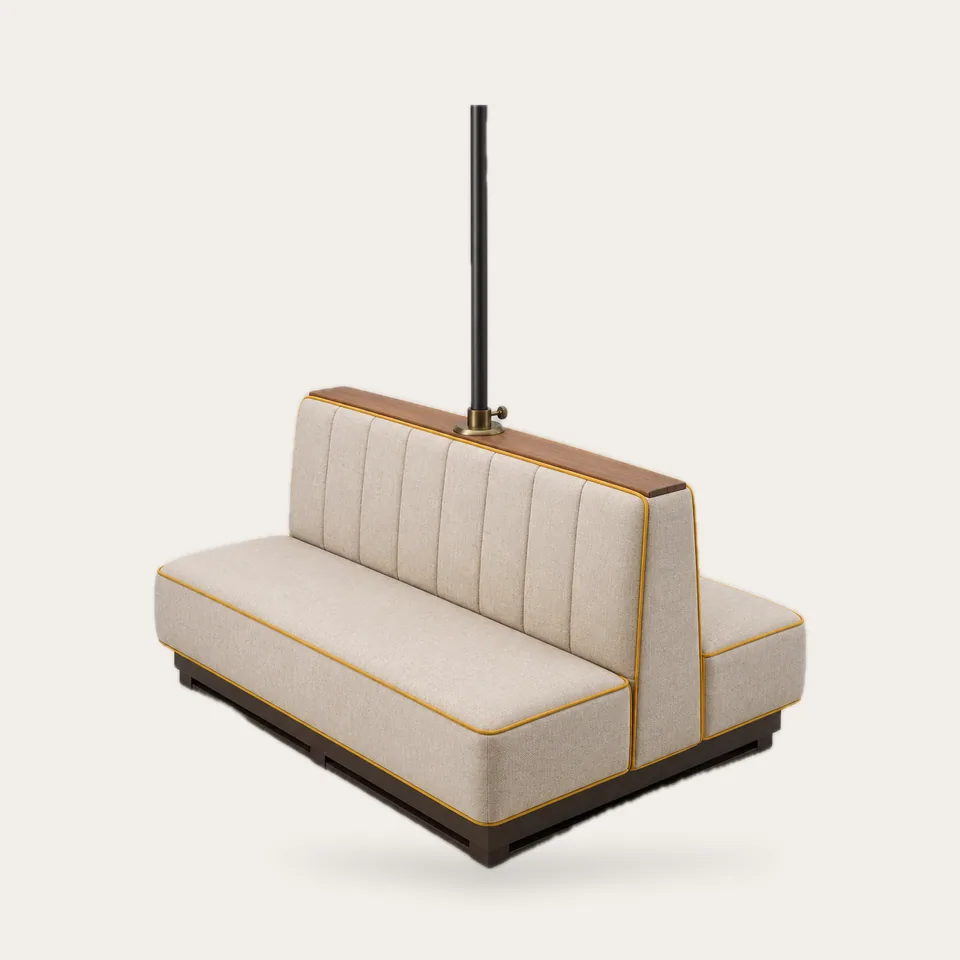
| Shade Island Umbrella Booth | Open plazas | Umbrella socket built into the spine |
| Roll-Away Patio Booth | Patios cleared nightly | Locking casters and push bar |
| Windbreak Glass-Screen Booth | Shoulder seasons | Glass screen rising from the back frame |
Standard seat height is 17.7 in (45 cm) with seat depths of about 22-24 in (56-60 cm); we adjust both to match your tables. Lengths are cut to your run, so a 22-ft patio wall gets booths that actually fit it rather than the nearest catalog size. Read our patio layout and capacity guide before you fix the layout.