Outdoor Cushion Fabric and Quick-Dry Foam for Restaurants: A Specifier's Guide (2026)
How to specify commercial outdoor cushions: solution-dyed acrylic vs polyester vs olefin, quick-dry reticulated foam, thread, zippers, drainage and fire rules.
Short answer
A commercial outdoor cushion that lasts uses three things together: a solution-dyed outdoor fabric (acrylic, polyester or olefin) with mildew-resistant finish, open-cell quick-dry foam that lets water drain straight through, and construction details (UV-resistant thread, mesh or drainable underside, ties or snaps) that stop the cushion holding water or blowing away. Get one wrong and the cushion fails, however good the other two are.
Most outdoor seating complaints are cushion complaints: damp seats the morning after rain, faded fabric on the sunny side of the patio, seams splitting after one summer. This guide from Alfresco Seat (a line by EASEN Commercial Furniture) explains what to specify and what to ask suppliers.
What makes a fabric "outdoor"?
An outdoor fabric is one designed to keep its color, strength and appearance under UV, moisture and mildew. Three properties matter most:
- Solution-dyed fibers. The pigment is added to the polymer before the fiber is extruded, so color runs through the whole fiber. Printed or piece-dyed fabrics carry color only on the surface and fade much faster outdoors.
- UV-stable polymer. Acrylic, polyester and olefin each have different UV behavior (see table).
- Finishes. Water-repellent and anti-mildew finishes help water bead and run off and slow mold growth on dirt that settles on the fabric.
Outdoor fabric types compared
| Fabric | Hand (feel) | Fade resistance | Water behavior | Abrasion | Typical use |
|---|---|---|---|---|---|
| Solution-dyed acrylic | Soft, canvas-like | Excellent | Breathable, water-repellent, dries fast | Good | Premium seat and back cushions |
| Solution-dyed polyester | Smooth, slightly crisper | Very good | Water-repellent | Very good | High-traffic seating, prints and textures |
| Solution-dyed olefin (polypropylene) | Slightly waxy | Good to very good | Hydrophobic, dries fast | Good | Value programs, rope and woven looks |
| PVC-coated polyester mesh | Firm, open | Good | Water passes through | Very good | Sling seats, drainable cushion bottoms |
| Outdoor vinyl | Smooth, wipeable | Moderate to good | Waterproof surface | Good | Quick-service, poolside where wipe-down matters |
Outdoor vinyl looks practical, but it is waterproof only on the surface: water that gets into the seams has nowhere to go and the cushion can stay wet inside. If you choose vinyl outside, insist on drain eyelets or a mesh underside.
How to read outdoor fabric test data
Supplier data sheets use standard test methods. These are the ones to look for and what is commonly expected for contract use:
| Property | Test method (US) | What it tells you | Typical contract expectation |
|---|---|---|---|
| Abrasion | ASTM D4157 (Wyzenbeek) double rubs, or Martindale cycles | Resistance to wear | ACT guidelines: 15,000 double rubs general contract, 30,000 heavy duty |
| Lightfastness | AATCC 16.3 (xenon arc), hours | Fade resistance | Outdoor fabrics are usually rated for far more hours than indoor; compare like for like |
| Water repellency | AATCC 22 spray test | How water beads off | Higher rating is better |
| Mildew resistance | AATCC 30 | Resistance to fungal growth | Pass for the finish tested |
| Seam slippage, tensile | ASTM D434 / D5034 | Strength at seams | Meets contract guideline values |
The Association for Contract Textiles (ACT) publishes voluntary performance guidelines that many specifiers use as a baseline. For outdoor fabric, the lightfastness rating is the most important number on the sheet; compare fabrics tested by the same method and for the same number of hours.
Quick-dry foam: why ordinary foam fails outside
Standard polyurethane upholstery foam has partly closed cells. Water soaks in and stays, and a seat cushion can hold water for days. That leads to wet trousers, mildew and foam breakdown.
Quick-dry foam (often called reticulated or open-cell foam) has had its cell membranes removed, leaving a skeleton of open strands. Water runs through it under gravity and air moves through it, so it drains and dries far faster. It is graded by pores per inch (PPI): coarser foams drain faster but feel firmer and show the structure through thin fabric; finer foams feel closer to normal upholstery foam.
| Foam | Drains | Comfort | Durability outdoors | Use |
|---|---|---|---|---|
| Standard polyurethane foam | Poor | Very good | Poor if wet often | Indoor only, or fully protected cushions |
| High-resilience (HR) foam | Poor | Excellent | Moderate if kept dry | Covered terraces with cushions stored |
| Quick-dry reticulated foam | Excellent | Good | Very good | Cushions left outdoors |
| Quick-dry core + thin comfort layer | Good | Very good | Good | Premium outdoor booths and lounge |
Avoid polyester fiber wrap on outdoor cushions unless it is a thin, quick-draining type: thick fiber wrap holds water against the foam.
Construction details that decide cushion life
- Drainage path. Quick-dry foam only works if water can leave the cushion. Use a mesh underside or a drainable seat deck. On our Tidewater All-Weather Booth, the seat deck itself is drilled and pitched forward so water leaves the cushion and the frame.
- UV-resistant thread. Standard polyester sewing thread degrades in sunlight and seams open after a season or two. Specify UV-resistant outdoor thread; PTFE thread is available on request for the most exposed sites.
- Zippers. Plastic or coated zippers, positioned on the back or underside so they are protected from sun and do not touch guests.
- Welts. Self-welt or contrast welt in the same outdoor fabric family. Vinyl welt cord can crack in cold.
- Wind restraint. Ties, snaps or webbing straps underneath. On rooftops, a loose cushion is a hazard as well as a loss.
- Removable covers. Lets you clean or replace fabric without replacing foam.
- Fabric railroading. For long booth runs, railroaded fabric (run horizontally) avoids seams across the seat.
Fire performance outdoors
Fire rules usually focus on indoor occupancies, but outdoor seating is not always exempt. Covered terraces, rooftop bars enclosed by structures and tented patios may fall under building or fire code requirements, and fabric structures such as tents and some awnings are commonly tested to NFPA 701. In California, upholstered furniture is subject to CAL TB 117-2013 for smolder resistance. Projects in the UK and EU may reference BS 5852 / BS 7176 or EN 1021-1/-2.
We specify fire-retardant foams and fabrics to meet the relevant standard on request and supply test reports for the specific item where available. Ask your fire marshal or code consultant what applies to your space before you finalize fabrics, because fire-retardant treatments can change the hand and color of some outdoor fabrics.
Specification checklist for outdoor cushions
- [ ] Fabric is solution-dyed; fiber content stated
- [ ] Abrasion and lightfastness data available from the mill
- [ ] Water-repellent and anti-mildew finish confirmed
- [ ] Foam is quick-dry open-cell, PPI or grade stated
- [ ] No thick fiber wrap, or quick-draining wrap only
- [ ] Mesh or drainable underside; seat deck drains
- [ ] UV-resistant thread specified
- [ ] Zipper type and position agreed
- [ ] Ties, snaps or straps against wind
- [ ] Fire performance requirement confirmed with your local authority
- [ ] Spare covers or extra fabric yardage ordered for replacements
Common mistakes
- Choosing fabric from an indoor swatch book. Even contract-grade indoor fabric is not built for UV and wet.
- Spending on fabric and saving on foam. A premium fabric over standard foam still produces a wet seat.
- Forgetting the underside. A sealed cushion on a sealed seat box cannot drain.
- Specifying dark solid colors for full-sun seats. Dark fabrics get hot; mid-tones and textures hide dust and fade better.
- No spare fabric. Dye lots change; order 5-10% extra yardage for future repairs.
- Leaving cushions out all winter. Even quick-dry cushions last longer stored dry in long wet or freezing spells. For seasonal programs, see our streetery and seasonal storage guide.
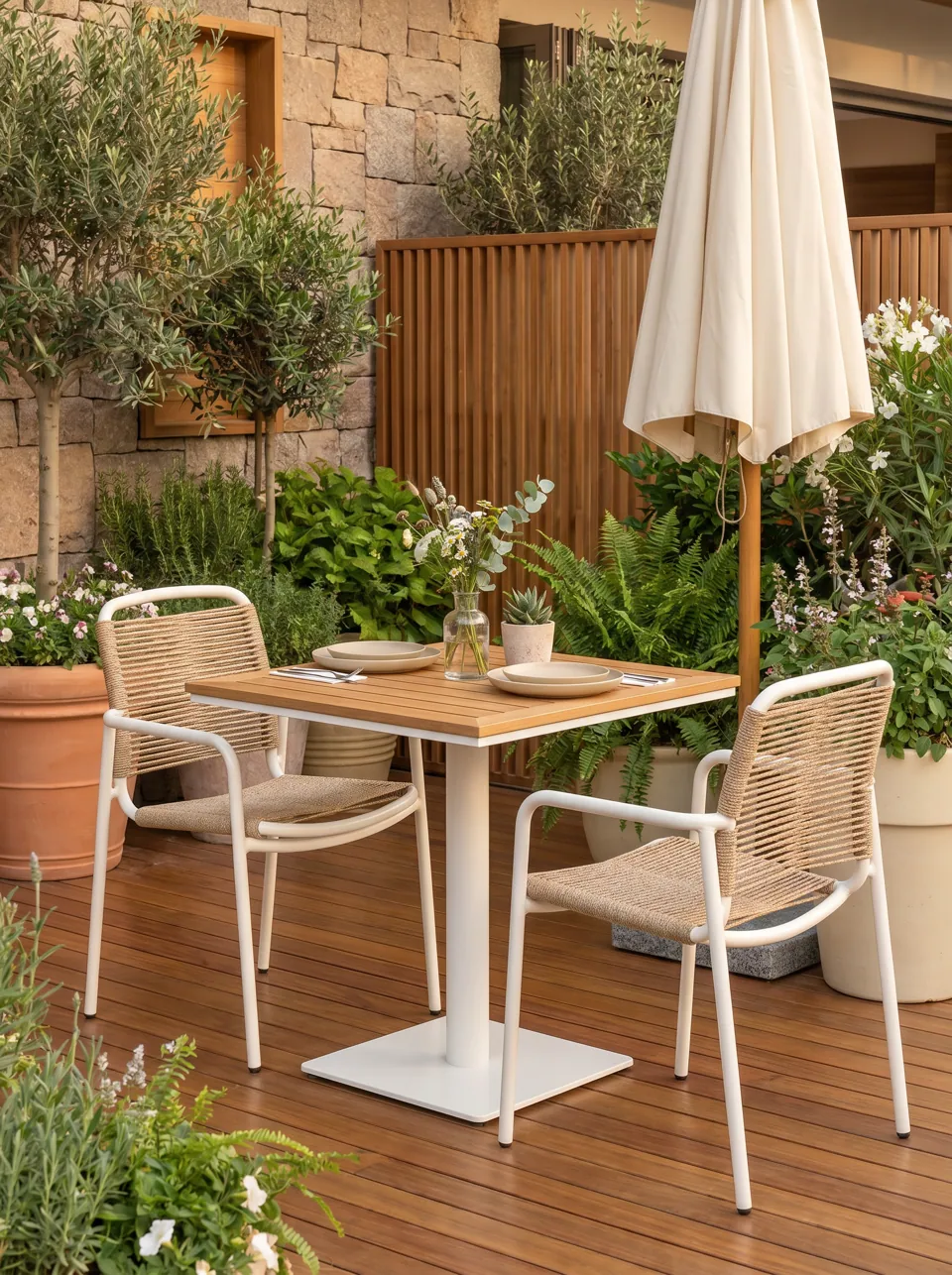
If you want to avoid cushions entirely on part of the patio, rope and slatted chairs such as those in our rope and woven seating collection need no cushion to be comfortable.
FAQ
What is the best fabric for restaurant outdoor cushions?
Solution-dyed acrylic is the most widely used premium choice for its fade resistance, breathability and soft hand. Solution-dyed polyester is a strong alternative for heavy-traffic seating. Whichever you choose, check lightfastness and abrasion data and pair it with quick-dry foam.
How fast does quick-dry foam dry?
It depends on cushion thickness, sun, wind and whether the underside can drain. Because water runs out under gravity rather than evaporating slowly, quick-dry foam on a drained seat deck is usually usable far sooner than standard foam, which can stay damp for days.
Can I use my own fabric (COM) for outdoor cushions?
Yes. Send the fabric name, width and repeat, and we calculate yardage per piece on the shop drawing. Make sure the COM fabric is genuinely rated for outdoor use and check its fire performance against your local requirement.
Do outdoor cushions need to be fire rated?
Not always, but covered, enclosed or tented spaces and some jurisdictions may require it. Ask your fire marshal or code consultant. We can specify fire-retardant foam and fabric to the standard they nominate.
How should staff care for outdoor cushions?
Brush off dirt regularly, rinse with mild soap and water, let cushions dry upright, and store them dry in long wet periods or over winter. Avoid pressure washers on seams and harsh solvents on fabric.
Send us your patio, rooftop or curb-lane plan with rough dimensions and seat count. We reply with layout suggestions, specification options and a quote.
Request a quote