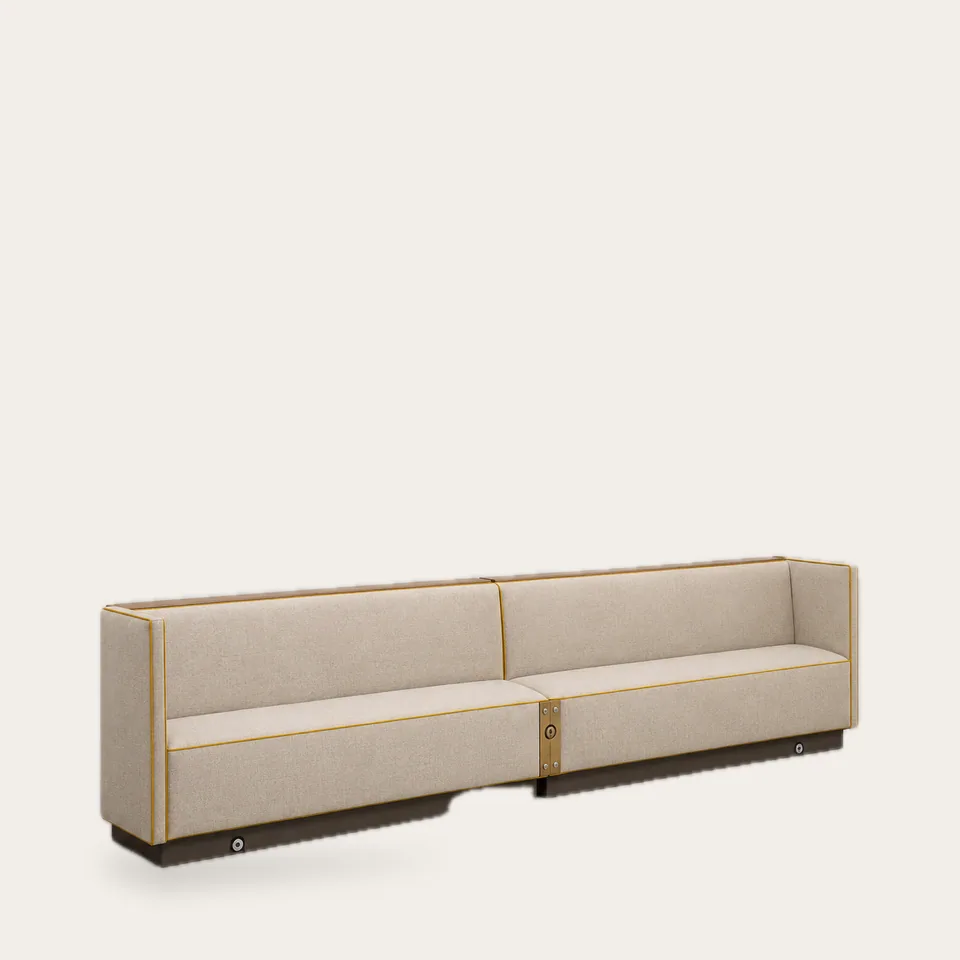
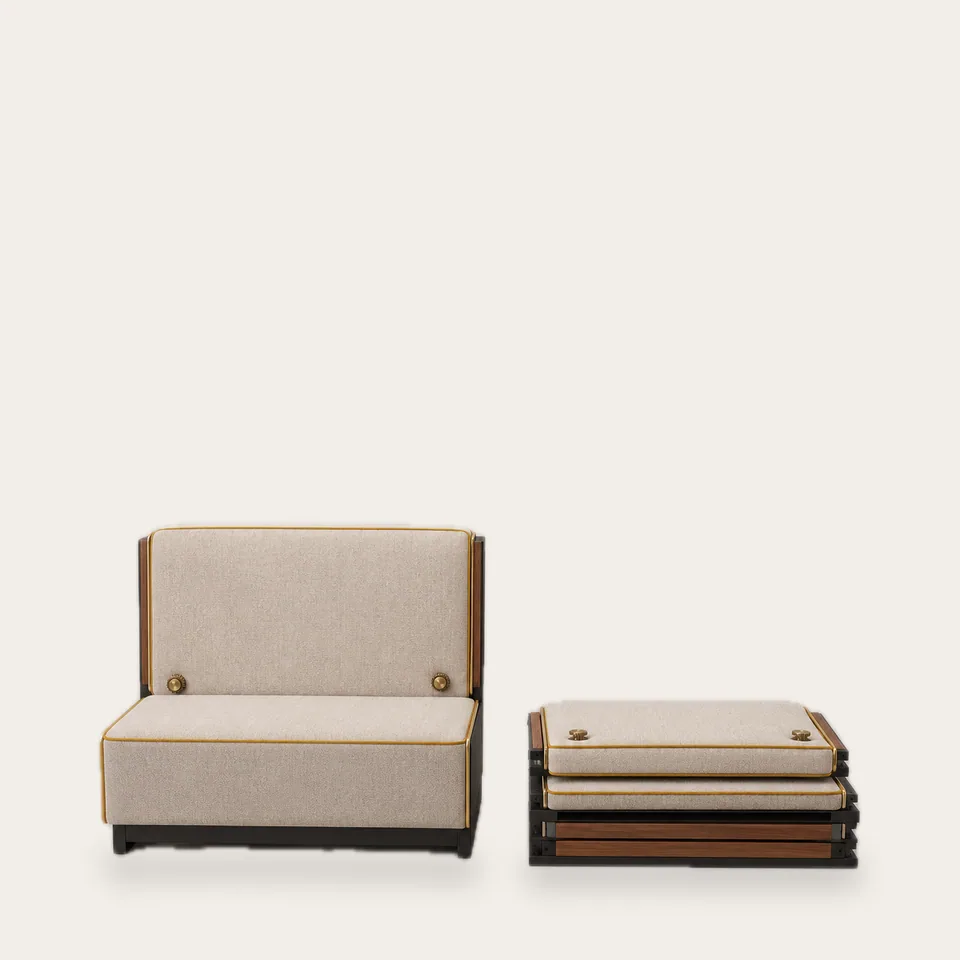
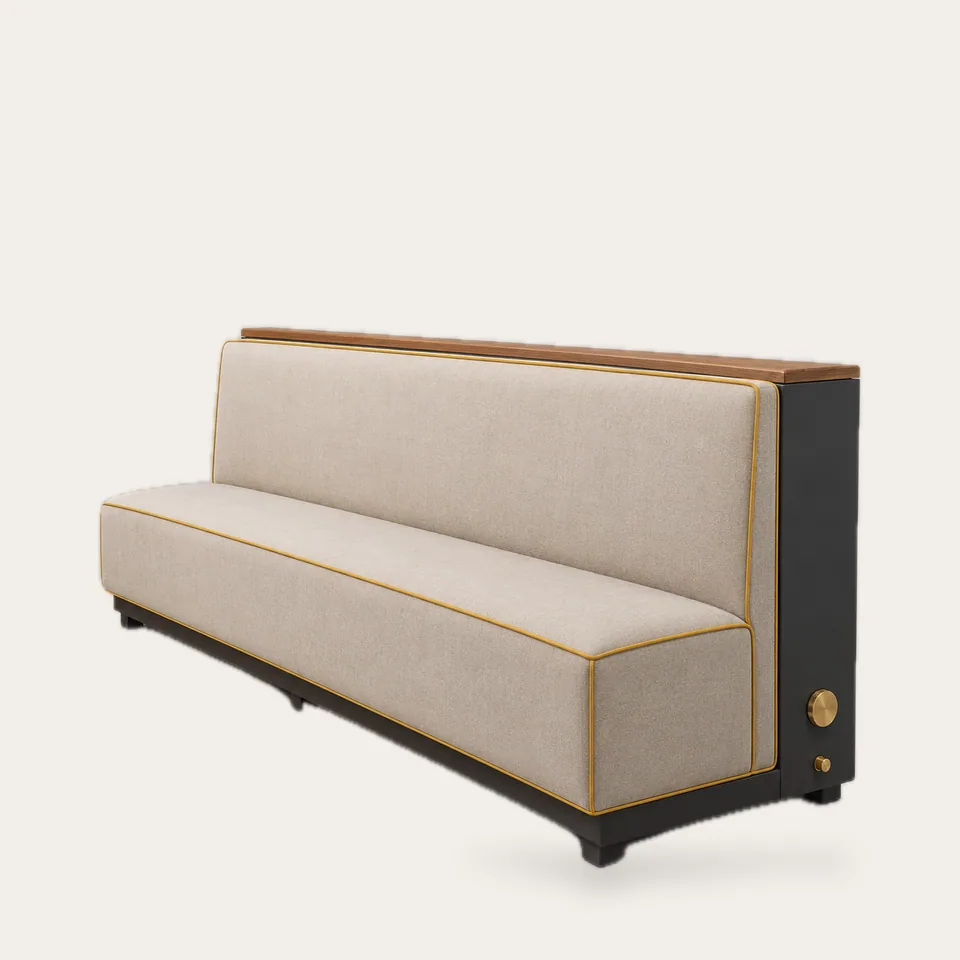
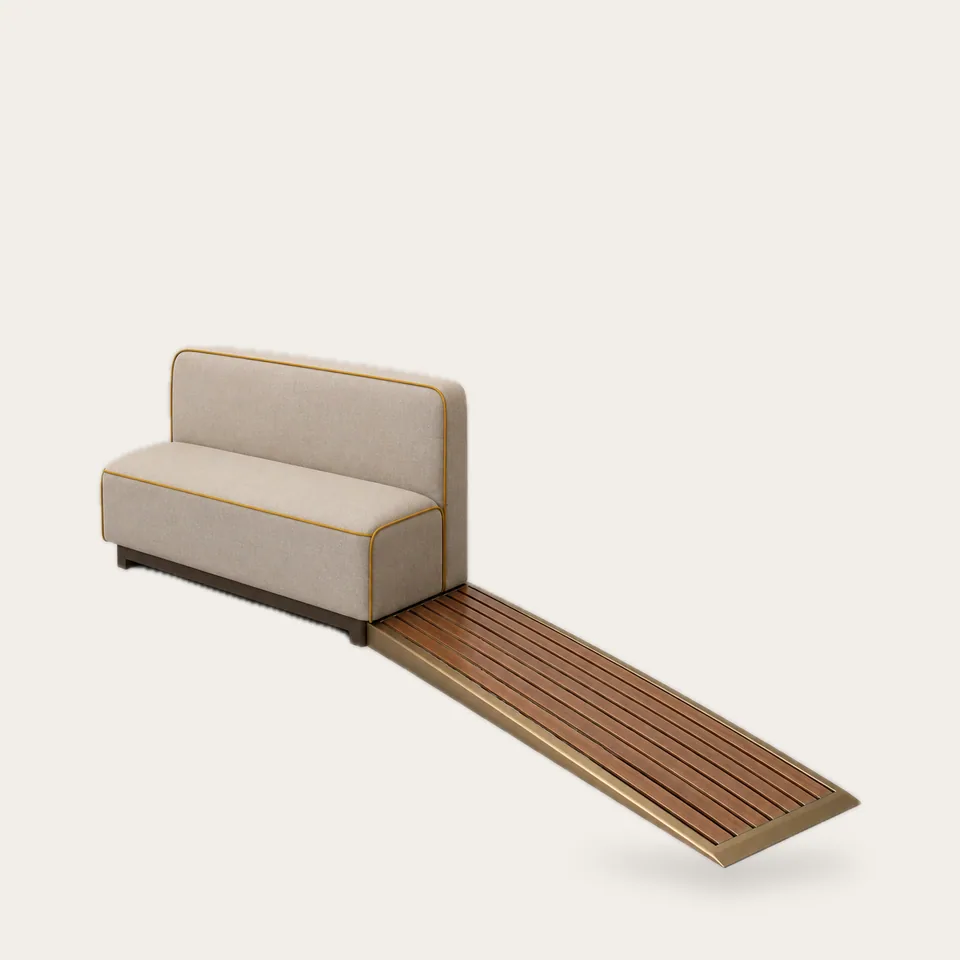
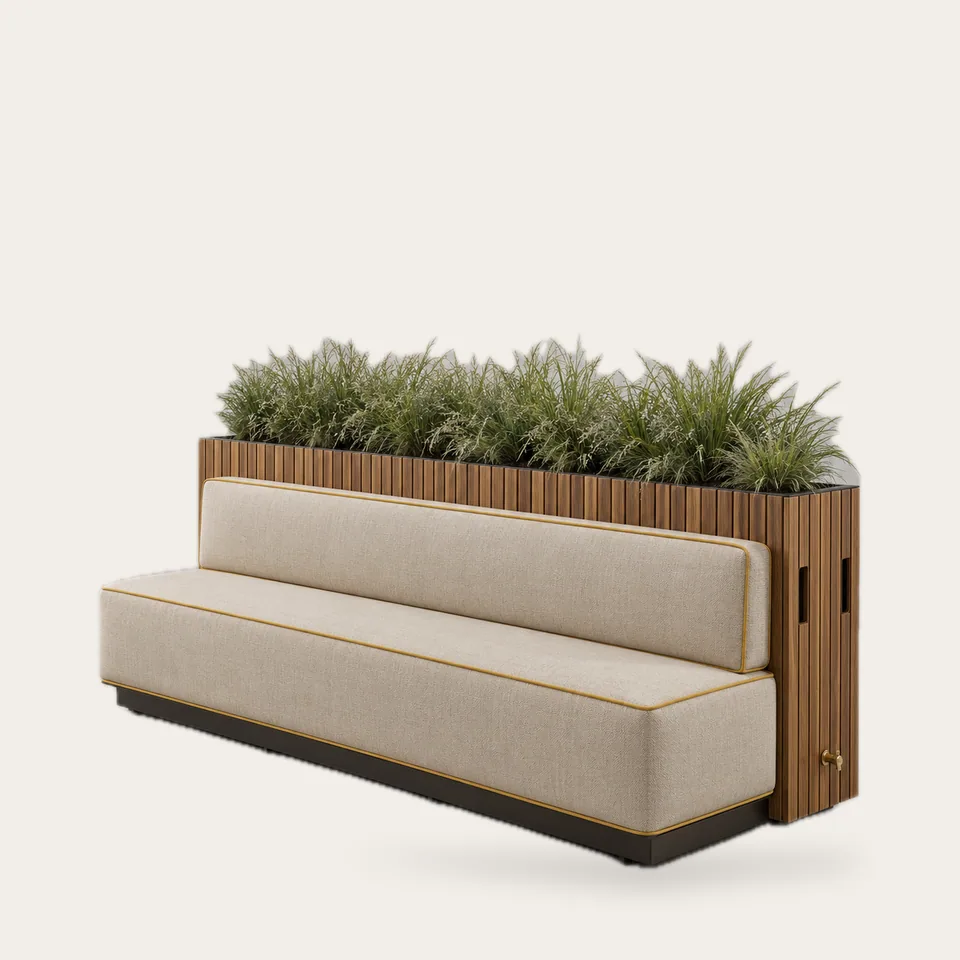
Curb-lane and sidewalk dining is now a permanent part of many US and European cities, but most programs come with rules that ordinary patio furniture ignores: seasonal removal dates, barrier requirements, keeping the gutter clear, limits on hard enclosures. These units were drawn with those rules in mind. They do not replace your permit: every city writes its own standards, so we build to the details your program and inspector specify.
| Unit | Problem it solves | What to confirm locally |
|---|---|---|
| Fold-Down Seasonal Booth | Roadway seating that must come out for winter | Removal dates, storage space |
| Ballast-Wall Curbside Booth | Barrier and seating as one piece | Required barrier height and weight per foot |
| Curb Bridge End Booth | Keeping the gutter flowing under a ramp | Gutter width, cover detail, accessibility |
| Green Edge Planter Booth | Sidewalks where hard barriers are not allowed | Planter height limits, sightlines |
| Night-Lock Anchored Bench | Furniture left out overnight | Permission to drill the surface |
Design principles across the range
- Every piece can be handled by two staff without tools or a forklift.
- Bases are raised so stormwater passes underneath.
- Fasteners are stainless; the hardware is finished in an antique-bronze tone that reads as deliberate rather than industrial.
- Panels flat-pack for shipping, which keeps freight volume down and makes damaged parts easy to replace.
If you are applying for a program, send us the city's design guide with your plan. We mark up the drawing against its dimensions so the furniture and the permit drawing say the same thing.